
 Youth Student’s Corner
by Sije Chantal Moylan
Fu For You Summer 2026
In Kung Fu, we are always learning, even the black sashes! One of the most important parts of improving is learning how to accept corrections. Sometimes getting corrected can feel embarrassing or frustrating, but corrections make your martial arts stronger.
When a leadership team member or a Sifu gives a correction, it is because they want to help you succeed. They are not trying to be mean or pick on anyone. They pay attention to all the students because they care about helping them improve their Kung Fu. If someone takes the time to correct you, it means they believe you can do whatever it is that you’re doing even better. Remember, even small mistakes in your stances or your technique can make the more challenging moves, sequences and forms a lot harder to learn later.
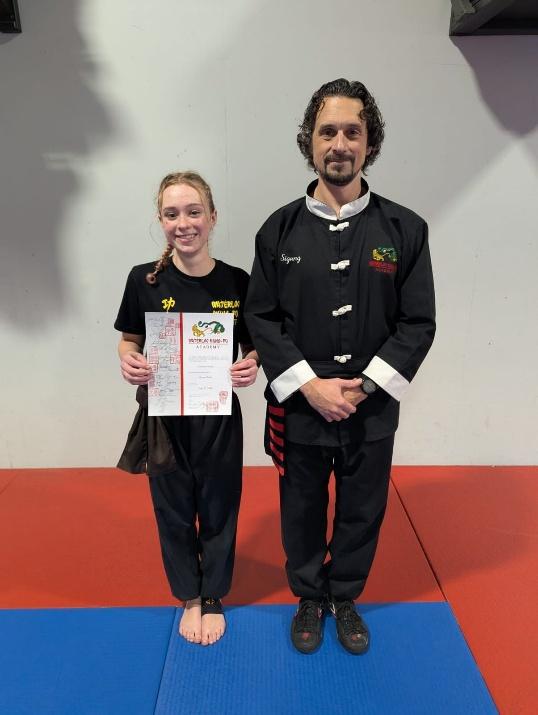 When you receive corrections, it is important that you listen carefully and respectfully. Instead of getting upset, accept the correction and make sure to ask any follow up questions. If you don’t understand why, the instructor will be happy to clarify the correction. This shows us your willingness to learn and it will help you stay focused on learning. And remember, it is okay to make mistakes; everyone does, the most important part is what you do after the correction.
After listening, try your best to apply the correction right away. For example, if someone tells you to bend your knees more in your horse stance, put some extra focus into concentrating on bending them right away, but also during the next time you do your horse stance. If they remind you to chamber more on your punches, focus on that every time you throw your next punch. The most improvement happens when you are actively working on the advice you are given. It also sticks better in your memory if you do it right away, at least a couple of times. If you get corrected on a section in your form, take some time to work on only that section. When I get a correction, I like to do it many times before moving on to make sure I really get it down.
It is also important not to take corrections too personally. Instructors are correcting the skill, not the person. Getting corrected does not mean you are “bad” at Kung Fu. In fact, the students who can accept and apply corrections are normally the ones who improve the fastest because they are willing to learn and grow.
So, the next time an LT member or a Sifu gives you a correction, remember that they are simply sharing their knowledge to help you become a stronger martial artist. Listen carefully, stay positive and practice the correction as much as you can.
Over time, those small improvements will help you grow into an even better Kung Fu student!